Career Planning Program: career coaching for women
A structured career coaching program for women: skills analysis, career vision, goal setting, executive CV, board bio, LinkedIn and a mock interview.

Career guide
A career coach helps you get clear on what you want from your work, plan how to get there and follow through, using structured conversations, practical tools and candid feedback.
A coach is most valuable when you're facing a career decision, aiming for a promotion or new role, returning to work or planning a board career, and you want an experienced guide beside you.
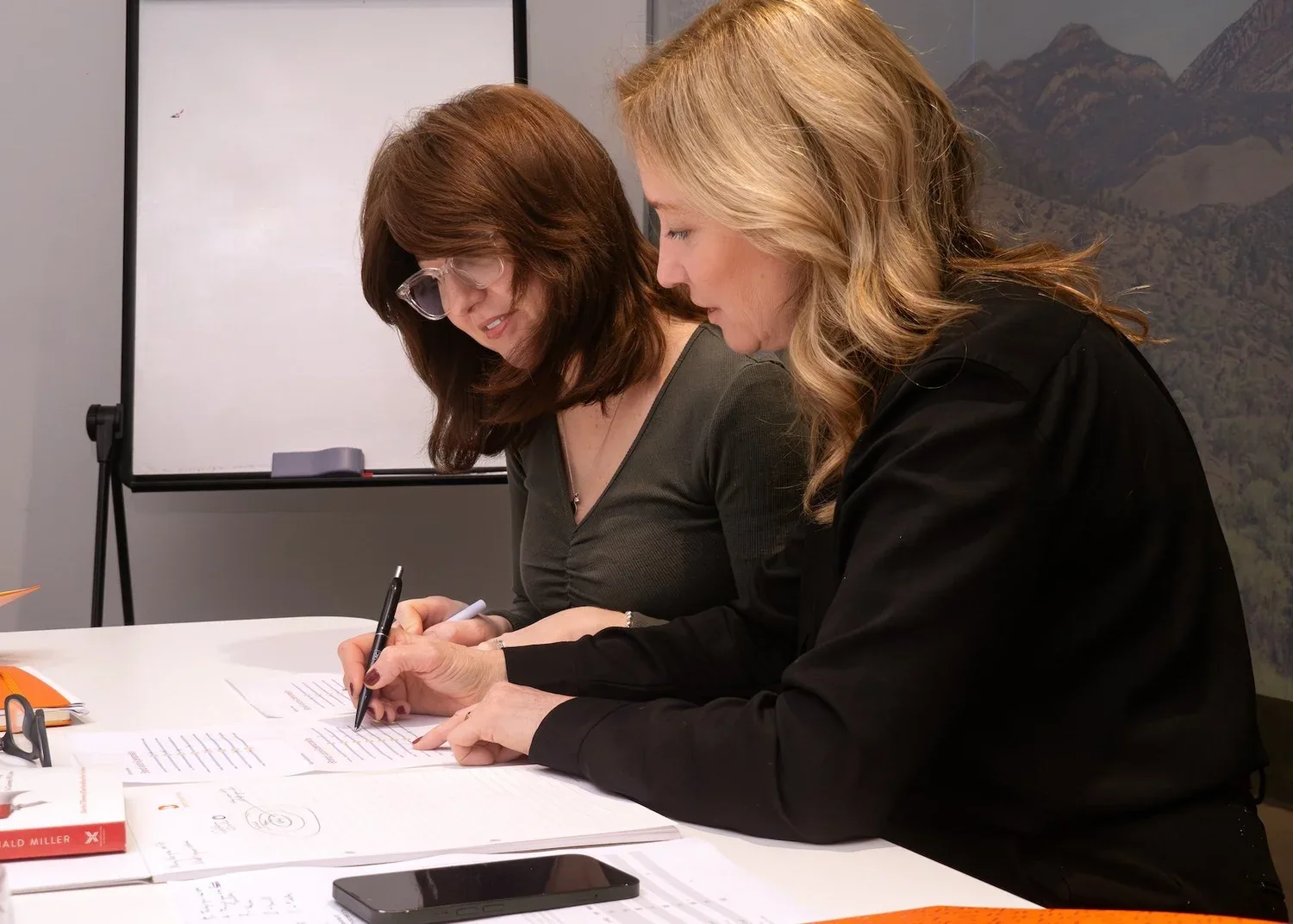
A career coach is a trained professional who helps you make and carry out decisions about your career.
They ask questions that help you see your options clearly, bring tools for assessing your skills and goals, and hold you to the actions you commit to.
The agenda is yours.
A good coach helps you find your own answers and adds experience, frameworks and feedback where they're useful.
Career coaching covers the whole arc of a career, from choosing a direction and preparing applications to negotiating an offer and settling into a new role.
These are the most common reasons women come to career coaching, and what the coach does in each case.
| You want to | How a coach helps |
|---|---|
| Work out what’s next | Skills and values analysis, a career vision and a comparison of realistic options |
| Win a promotion | Mapping your achievements to the criteria and planning the conversation with your manager |
| Change sector or role | Translating transferable skills, planning bridging experience and preparing your story |
| Present yourself well | Achievement statements, a tailored CV, a LinkedIn profile and a personal value proposition |
| Interview with confidence | Mock interviews with feedback and a set of rehearsed achievement stories |
| Negotiate the offer | Research on the role’s value and practice for the salary and conditions conversation |
| Build a board career | A board CV and bio, governance learning and a plan for your first appointment |
Career coaching usually moves from understanding yourself, to deciding on a direction, to acting on it.
Our Career Planning Program is a good worked example of that arc across 4 sessions.
Your skills and personal qualities, your current situation, your satisfaction with your role, and the first draft of your personal value proposition.
What you have to offer, formulating achievements into achievement statements, evaluating your skills and weighing up career alternatives.
The principles of effective goals and setting your own, with the actions that follow.
Your executive CV or board bio, covering and follow-up letters, responding to advertisements, your LinkedIn profile and a mock interview.
Between sessions, you do the work of drafting, researching, having conversations and trying new approaches.
Each session starts with what you've learned since the previous session, and that review is where much of the progress shows up.
“This program delivered high value advice and guidance for my career goals and future aspirations. I sincerely appreciate the quality and depth of knowledge, skills and experience shared with us in such an engaging, challenging, fun and supportive way. Not only do I now understand the systematic approach to marketing myself with my professionally crafted CV/Resume, I have a tool that will see me polished and prepared for all aspects of driving my career growth.”
Any time is a good time to invest in your career, and some moments make coaching especially valuable.
Several professionals can help with your career, and each plays a different role.
| Role | Focus | Best when you want |
|---|---|---|
| Career coach | Your goals, decisions and actions, through structured sessions | A plan and the accountability to carry it out |
| Mentor | Sharing their own experience of the path you’re on | Perspective and advice from someone who has been there |
| Recruiter | Filling a specific role for their client | Access to roles that match your experience today |
| Psychologist or counsellor | Wellbeing and mental health | Support with stress, anxiety or personal difficulty |
Coaching focuses on your goals and actions, and a psychologist or counsellor is the right professional for mental health support.
Our guide to finding a business coach covers the same choices from a business owner's point of view.
Career coaching prices vary widely, and a few factors explain most of the difference.
Ask any coach for a written outline of sessions, inclusions and fees before you start.
Our Career Planning Program is $9,500 + GST for 4 x 2-hour 1:1 sessions with Donny Walford, and we're happy to talk through the format with you.
Look for relevant experience, a recognised credential and a good personal fit.
The International Coaching Federation (ICF) awards 3 core credentials: Associate Certified Coach (ACC), Professional Certified Coach (PCC) and Master Certified Coach (MCC).
According to the ICF, they require at least 60, 125 and 200 hours of coach education and 100, 500 and 2,500 hours of coaching experience respectively.
Coaches in our directory list credentials such as ICF certification and coach certification from other recognised institutes in their profiles, alongside their executive and business experience.
Before you commit, hold a chemistry conversation to test the fit.
You can browse the experience and credentials of our business coaches and mentors, or ask us to match you.
Career coaching works well alongside other kinds of support, because each covers something the others can't.
A coach helps you plan and act, a mentor shares the view from further along the path, and a peer group gives you several perspectives and keeps you accountable.
In our facilitated peer groups, members bring real career decisions to a confidential table of women from different industries, and each member has an accountability partner between sessions.
Our guide to how facilitated peer mentoring works explains a session step by step.
If you'd like to start on your own first, our guide to making a career plan takes you through the same stages a coach would, and our guide to writing a professional development plan turns your goals into actions.
A career coach helps you decide what you want next in your career and then get it, by clarifying your strengths and goals, building a practical plan, sharpening your CV and interview story, and holding you accountable while you act.
The focus is always your goals, and you do the deciding.
A career coach is optional, and many women find that working with a coach speeds up their progress when they face a big decision, a promotion, a return to work or a board ambition.
If you’ve been thinking about the same career question for more than a few months, a coach can help you move from thinking to acting.
Career coaching usually runs over several sessions of 60 to 90 minutes, spread across a few months so you have time to act between them.
A focused goal such as interview preparation may need 1 or 2 sessions, while a career change usually needs more.
Our Career Planning Program is structured as 4 x 2-hour sessions with Donny Walford, from skills analysis through to a mock interview.
Career coaching is worth it when you arrive with a real goal and act between sessions, because the value comes from decisions made and steps taken sooner than you’d have alone.
Agree the outcome you want at the start so you can judge the result.
A career coach uses structured questions and tools to help you find and act on your own answers, usually over a set number of sessions.
A mentor shares their own experience of the path you’re on, often over a longer, more informal relationship.
Many women benefit from both at once.
Yes, a career coach can help you prepare for promotion by mapping your achievements against the role’s criteria, planning the conversation with your manager and rehearsing how you’ll make your case.
The coach prepares you, and the promotion itself comes from your results and the case you make.
Yes, professional career coaching is confidential, and you should agree the terms of confidentiality in your first session.
At behind closed doors, confidentiality is established in the first session and honoured throughout the relationship.
News, events and ideas from behind closed doors, in your inbox.
We use your details to send you our updates, as our privacy policy explains.
Tell us what you’re working towards and we’ll suggest the program or coach that fits.