Connect Memberships: women's networking and learning on your schedule
Connect memberships for women who want light-touch networking: online peer group sessions with Donny, Connexions events and coaching, from $495 + GST.

Career guide
Networking is building genuine, 2-way relationships with people who can share knowledge, opportunities and support, and it works best when you network with a clear purpose, a generous mindset and steady follow-up.
Decide what you want from your network, choose a few places to show up regularly, prepare how you'll open and close conversations, follow up within 2 days and keep in touch over the long term.
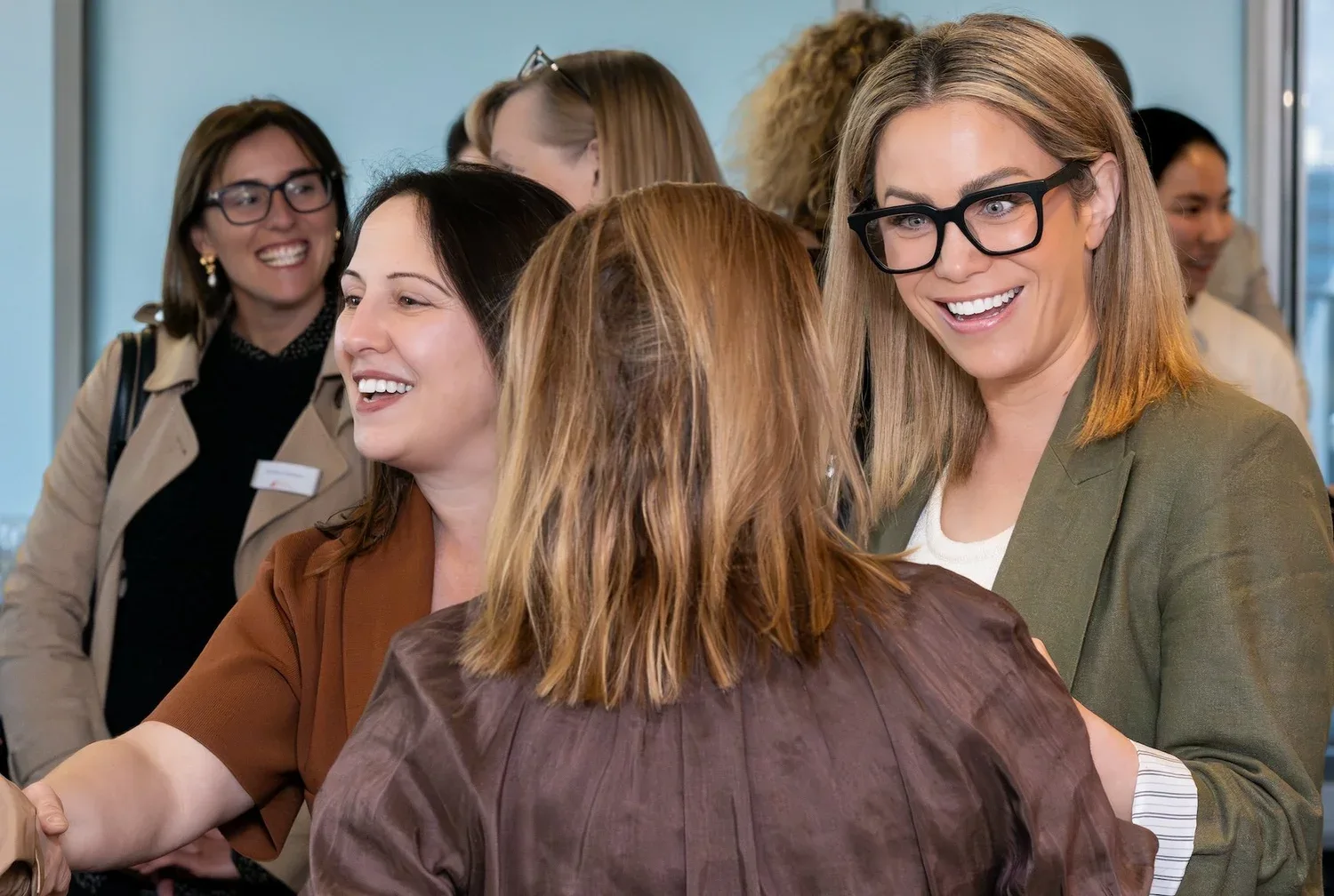
Good networking is about building relationships over time.
The aim is a circle of people who know what you do, trust you and are glad to hear from you, and whom you're glad to help in return.
Handing out business cards at every event is the old picture of networking.
The women who network well tend to do fewer things more consistently, returning to the same few groups, going deeper in conversation and following up so a meeting becomes a relationship.
Many women find networking easier once it's framed as helping and learning from others, and that framing is exactly what makes it effective.
As our founder, Donny Walford, puts it, networking is about building genuine relationships that mutually nurture your careers.
Networking with a purpose makes every choice easier, from which invitations to accept to what you talk about.
Your purpose will change over time, so write down what matters now.
Choose 2 or 3 regular places to show up, and commit to them.
Relationships grow through repeated contact, so regular attendance at a few events beats a crowded calendar.
| Where | Best for | Tip |
|---|---|---|
| Industry associations and professional bodies | Staying current and being known in your field | Volunteer for a committee to meet people faster |
| Women’s networks and peer groups | Deeper relationships, candid advice and referrals across industries | Join a small group that meets regularly, not only large events |
| Inside your organisation | Visibility with decision-makers and cross-team allies | Offer to join projects that span several teams |
| Conferences and seminars | Meeting experts and people outside your usual circle | Pick 2 sessions and speak to the presenters afterwards |
| Alumni and community groups | Warm connections through a shared background | Reconnect with 2 people a month from your course or former employers |
| Online communities and LinkedIn | Staying in touch at scale and meeting people in other cities | Comment thoughtfully before you send a connection request |
Most networking nerves come from not knowing what to say, so prepare a few lines in advance.
Curiosity carries a conversation further than a polished pitch.
Ask open questions, listen for what the other person cares about and look for a way to be useful.
Aim for 3 or 4 good conversations at an event rather than a room full of brief ones.
Before you move on, note 1 thing you learned about each person, because that detail makes your follow-up memorable.
A little preparation turns an event from something you get through into something that moves your goals forward.
Following up is where networking turns into relationships, and it's the step most people skip.
Within 2 days, send a short message that reminds the person where you met, mentions something specific from your conversation and offers something useful.
That offer might be an article, an introduction, an event invitation or an answer to a question they asked.
If you agreed to meet again, suggest 2 times in the same message so the next step is easy.
The strongest networks are built by people who help first.
Every conversation is a chance to share what you know, make an introduction or champion someone else's work.
Generosity builds goodwill, and when you later ask for advice or an introduction, the relationship is already there.
Some of the most valuable things you can give cost nothing, such as a referral, a recommendation on LinkedIn, public credit for someone's work, or putting a woman's name forward for a role, panel or award.
“BCD truly epitomises the saying, 'Surround yourself with women who would mention your name in a room full of opportunities'.”
 Anna DimondBCD Entrepreneurs Member
A simple system keeps your network warm without taking over your week.
Introverts often make excellent networkers, because they listen well and prefer depth to small talk.
The trick is to design networking around those strengths.
“I joined behind closed doors at a time in my career where I knew I needed to make a step change, when I felt I could be making a much greater contribution at the Executive table but was not being heard at the same level as the men in the room.
I recognised that traditional networking was not my strength and I had procrastinated for 2 years on my way forward.
I was regularly the only woman in the room at the Executive level and lacked female peers.
At my first session I left with ideas and advice on how to subtly change my delivery style in board meetings to be better heard; and two weeks later at my next board meeting was astounded to see the immediate change in how I was perceived and listened to in the room.
My experience of the behind closed doors community is women who genuinely want to support and progress each other, who give openly, generously and continually their wisdom, experience and advice, who provide contacts and introductions and joyously celebrate each others successes.
behind closed doors keeps me accountable to the goals I have set, and they ask me the hard questions whilst helping me work through the options and ways forward.
An accountability partner provides a sounding board, a peer, a safe place to discuss between group meetings and someone you know will help keep you accountable to the goals you have set.
I would unreservedly recommend behind closed doors.
It is a safe place I have cried, laughed, challenged and been challenged, and ultimately celebrated success for myself I had thought out of reach.
It is so much more than professional development and networking – it feels like the first thing in my working life I have truly done for myself.”
Connecting up means building genuine relationships with senior leaders who can advise you, advocate for you and open doors.
Look for common ground such as shared interests, values or experiences, and think about what you can offer in return, such as a perspective from the front line or help with a project they care about.
Ask for specific, modest things first, like a 20-minute coffee or feedback on a proposal.
Over time, some of these leaders may become sponsors who put your name forward when opportunities come up.
Online networking keeps relationships alive between meetings and lets you meet people in other cities.
Our guide to building your personal brand covers how to set up your profile first.
behind closed doors brings together executives, emerging leaders and entrepreneurs, and our events and memberships are designed for relationship-first networking.
You can see what's coming up on our events calendar.
If you're between roles or changing focus, a Connect Membership keeps your momentum, visibility and networks going during the transition.
And if your networking goal is a new role, our Career Planning Program helps you decide where you're heading so you know who to meet.
“BCD provides a space that is unlike other networking groups. It's the best thing I have done for my career and personal life.”
 Sarah RussoBCD Executives Member
News, events and ideas from behind closed doors, in your inbox.
We use your details to send you our updates, as our privacy policy explains.
Our Connect Memberships give you Connexions networking events, online peer group sessions with Donny Walford and a national community of professional women, on your schedule.